
When purchasing flooring, the terms carpet and rug may look similar to you. What is carpet and what is rug? The main feature of a carpet is that it is usually installed as a fixed covering throughout the room, whereas a rug is a portable piece of furniture covering only part of the floor. It is easy to think that distinguishing what is the difference between carpet and rug is only a question of aesthetic view.
However, you should remember that carpets and rugs also differ in terms of installation, materials, cleaning processes, price and durability. One of the main distinctions between a rug and a carpet is the way they are applied to the floor. A carpet is typically fitted to cover most or all of a room and is secured as part of the flooring, whereas a rug covers only part of the floor and is generally removable and easy to move.
Main Difference between Carpet and Rug
| Feature | Carpet | Rug |
| Coverage | Usually covers an entire room | Covers a specific area |
| Installation | Typically fixed or permanently installed | Loose and movable |
| Portability | Cannot normally be moved easily | Can be rolled, moved or replaced |
| Cleaning | Usually cleaned in place | May be cleaned in place or removed for specialized cleaning |
| Design | Creates a consistent room-wide appearance | Offers greater flexibility in colour, pattern and placement |
| Cost | Includes material and installation costs | Has a wide price range depending on size and construction |
| Replacement | More involved | Usually easier to replace |
| Best for | Full-room comfort and insulation | Defining areas and adding decorative accents |
What is the difference between a rug and carpet? The fact that both carpet and rug are types of textile flooring does not mean that they serve similar purposes. It also appears that both of the terms have slight variations based on the place and context, so the method of fitting and the nature of use are usually more efficient in differentiating the two types of flooring than the size alone.
What Is a Rug?
The rug is a separate type of floor covering. It is usually smaller than the room. The rug is not fixed to the floor in any way. For instance, it can be placed under the sofa or coffee table, or near the bed or dining table.
A rug, as a furniture item, can be moved from place to place or rolled up, unlike a carpet. This is the reason why the rug is beneficial in terms of protecting hardwood or tiled floor while being capable of adding style to it.
Varieties of Rugs
There are many types of rugs, such as:
- Area rugs
- Decorative rugs
- Persian rugs
- Oriental rugs
- Handmade rugs
- Machine-made rugs
- Flatweave rugs
- Shag rugs
Rugs can be made in different ways, from simple machine-made techniques to complicated hand-knotted ones.
Materials and the Rug Production
In most cases, rugs may be made from wool, cotton, silk or other woven materials, so there are different ways of cleaning them. In the case of the handmade wool rug, the cleaning procedure will differ from the cleaning of synthetic rugs.
What Is a Carpet?
A carpet can be defined as a type of textile floor covering that is used to cover a large space such as a room completely. Unlike a rug, wall-to-wall carpet becomes part of the floor covering of the room.
Carpets can be manufactured using different types of processes, and they can have different characteristics, such as pile height, fibre material and texture.
How Is Wall-to-Wall Carpet Installed?
The installation of flooring involves different techniques such as glueing. Carpet differs from rugs in the sense that it cannot be lifted and moved from one place to another since it fits perfectly into the room. The carpet will need to be taken off if you plan to change your flooring.
Popular Types of Carpet Materials
Here are some well-known materials:
- Nylon is known as one of the most durable and resilient fibres for the manufacture of carpet and, therefore, can be used in high-traffic areas.
- Polyester is characterized by the softness of its texture, its various colours and its level of resistance to certain stains.
- Wool is a natural fibre appreciated due to its softness, appearance and durability while being maintained correctly.
- Synthetic materials used in carpets give them practical value depending on the required level of maintenance and performance.
However, fibre is just a part of the whole story. There are many other factors impacting the performance of the carpet, such as pile, density, backing, structure and usage.
Main Differences Between Carpet and Rugs
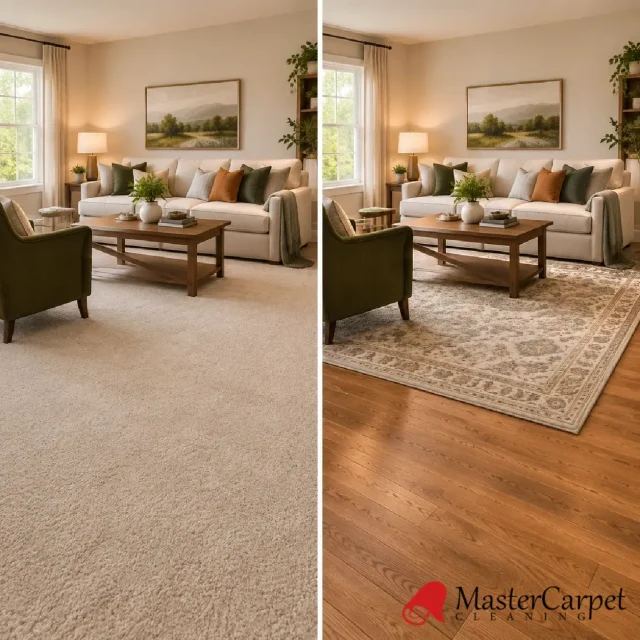
What is the difference between carpet and rug? To answer this question, consider the following points.
Size and Floor Coverage
One of the easiest ways to differentiate a carpet from a rug is by the amount of floor area it covers. Carpet is usually a floor covering that covers either most or all of a given room, thus giving rise to a seamless floor surface.
An area rug, on the other hand, will only be placed on a certain limited portion of the floor. However, there is no hard and fast rule as to what size of rug can be termed as carpet. Medium or large rugs cannot possibly be turned into carpets as long as they remain separate and mobile floor coverings. The concept of installation and function remains far more important than the size.
Installation and Mobility
In most cases, carpet is a permanent type of flooring solution, once it has been installed. It requires a lot more effort to change it compared to rugs.
Fibres & Construction
Both carpeting and area rugs can be made of natural and synthetic fibres, so the materials alone do not dictate how a floor covering is classified. However, one key answer to what the difference between carpet and rug is lies in the sheer variety of how rugs, more often than carpet, are crafted.
Handmade, hand-knotted or purely decorative rugs may include complex materials, dyes, backings or intricate finishing techniques, so you have to handle them specially. Carpet is generally manufactured to provide consistent coverage and performance across a larger floor area.
Cleaning and Maintenance
In this case alone, along with room size, the largest practical distinction may be noticed. Wall-to-wall carpets are normally cleaned onsite as they are affixed to the floor. Standard upkeep usually consists of frequent vacuuming and spot cleaning, then regular deep cleaning professionally when the need arises.
Most area rugs may be vacuumed and spot cleaned at home. A few small ones could also be run through a washing machine if the designer recommends it. However, larger, valuable, fine, handmade or intricate rugs might require specialized cleaning beyond what ordinary wall-to-wall carpet cleaning involves.
That’s why area rugs should not immediately be cleaned just like carpets, since rug versus carpet cleanup strategies need not be the same. Rug components, dye substance, weave form, pile thickness, exposure to light, wear, upkeep habits and the room itself are all crucial considerations in choosing a method to clean and care for floor furnishings.
Costs and Replacement
The purchase and installation costs of carpet are generally one-time expenses. Padding costs, floor preparation, labour and installation time can all add up to the overall expense involved in wall-to-wall carpeting.
Rugs, nevertheless, run the gamut. You could find a modestly priced rug made by a machine, while a hand-knotted Oriental rug might require thousands in expenses and many hours devoted to creating it, as even a small area may involve significant costs for raw materials and workmanship.
Comfort, Warmth & Sound
However, carpet usually provides a warm and comfortable experience throughout the entire room. Carpets can also offer a good buffer against household sounds as people move around, while providing a uniformly comfortable surface to walk on.
Style and Interior Design Flexibility
Carpets do have some advantages in terms of decorative flexibility, but they are still relatively limited. While carpet covers the floor and contributes to the overall appearance of a room, if there comes a time when the colour choice is no longer pleasing to the eye, you cannot easily change the carpet colour you have used.
However, an area rug allows you to change styles, colour choices and the overall look of your indoor space every few months or whenever you become bored with the existing design, without having to alter your interior décor or change the flooring at all.
Use and Lifespan
In relation to the durability of these items, it is not a secret that either type can be about as resilient as the other. How long either one lasts depends on factors such as the fibres and the materials they consist of, how they have been treated throughout their lifespan, and the location in which they are used.
A carpet, as well as a rug, may not last forever, yet that certainly should not imply that one is superior to the other.
Carpet vs Area Rug: Pros and Cons
We recommend looking into carpet versus rug for your situation:
Pros and Cons of Carpet
| Pros | Cons |
| Softness throughout the whole floor | Needs an installation by professionals |
| Provides warmth and cushioning | Difficult to replace |
| Ideal for bedrooms and other rooms, where covering the floor with carpeting is preferable | Cleaning cannot be done by removing it |
| A uniform look across the area | Changing the floor decor may be rather complicated and require the replacement of the whole covering |
Pros and Cons of Rug
| Pros | Cons |
| Easy to move and replace or change its position | Can slide without a special mat under it |
| Ability to establish and define spaces in the room | Some materials and constructions require the use of particular cleaning methods |
| Can be removed for cleaning purposes in some cases | Edges and fringes require special treatment |
| Flexible design possibilities | The cost of some of them may be high regardless of their smaller sizes |
Which Is Better: Carpet or Rug?
The answer is it depends! Carpets and rugs are often used interchangeably. However, in design, carpet is a fitted floor covering that spans the floor wall-to-wall. A rug is generally a movable floor covering with defined edges.
Area rugs, defined as floor coverings that lie over existing floors, add to a room’s design by defining a space or acting as a focal piece. Let’s explore each to determine if there is a best fit for your needs.
Carpets are available in a wide array of styles, densities, fibre content and patterns. Here’s a look at what you may consider when choosing carpets. Area rugs are similar in function to carpets, but the difference is that while rugs are flexible and easy to replace, carpet means making an ongoing commitment to that type of floor covering. Best for Rooms:
For Living Rooms
Define the seating area or use a large area rug to break up a space to create cozy zones. As part of the furniture in this space, an area rug can also add a touch of creativity to your decor. If you opt for wall-to-wall carpeting, an entire room may feel cozier
For Bedrooms
When this area is part of a larger master suite, rugs are the answer for defining the sleeping space. A soft carpet may feel warm and comforting and may be the right choice when you prefer to step onto cushioning every day. Consider the rugs’ high durability but know they tend to have a higher price point.
For High-Traffic Areas
In general, the fiber, pile and weave of the material used will influence its durability. Whether or not your rug can be moved outdoors should strongly influence your choice because it will be the primary means of cleaning .
Aesthetically, you want a very well constructed and durable carpet if this is going to withstand considerable foot traffic.
For Homes With Children or Pets
Whether you plan to have children or pets, either surface can accommodate you if you are prepared to invest time in regular cleaning. The only upside to a rug, or rather, the rug, is its flexibility and ease of replacement if the damage becomes excessive.
For Renters and Condos
It can instantly add warmth and personality. Carpets can leave a permanent change so be sure to obtain permission if this may be an issue.
Are Rugs or Carpets Better To Clean?
On paper, the answer is likely rugs. If no other cleaning method is effective, you may be able to simply put a washable rug in your washing machine. Smaller hand-washable or machine-washable pieces have that advantage over carpets that are attached wall-to-wall.
With this flooring, when cleaning, be careful that you do not over-saturate the carpeting because there is always moisture associated with that kind of cleaning and there is the real possibility of the excess moisture leaking down to your hardwood.
The ‘care and cleaning instructions’ are listed on nearly any carpet product, and it is important to adhere to them so that you do not create a situation of poor performance with the installation you have chosen.
It should be mentioned here that the use of off-the-shelf carpet-cleaning machines should be carefully considered when determining the cleaning methods and products to use on area rugs.
The type of carpeting and the type of area rug differ greatly, so your chosen material is also critical.
As always, follow the manufacturer’s installation care guide instructions when dealing with these types of items.
When Should You Have a Carpet or Rug Professionally Cleaned?
Though regular vacuuming can remove superficial dirt, it cannot take the place of deep cleaning. Call a professional to clean your carpets or rugs when:
- Your rug or carpet experiences heavy traffic and has visible dirt.
- You are dealing with persistent stains.
- Foul smells emanate from your carpet or rug.
- Dirt is embedded too deeply for your vacuum cleaner to remove.
- You have accumulated pet hair.
- You notice a significant change in the appearance of your carpet or rug.
- Your rug or carpet is made of delicate fibres and therefore requires specific treatment.
- The manufacturer advises you to seek professional cleaning.
When it comes to valuable handmade rugs, proper advice from a professional can help you avoid damaging the fibers, dyes, and backing. If your carpets or rugs need more than regular maintenance, consider turning to experts instead of relying on general-purpose DIY units.
For professional care, Master Carpet Cleaning can help homeowners deal with carpets and rugs that require deeper or more specialized treatment.
If you are a homeowner in Toronto and you want to get your rug cleaned, then professional rug cleaning Toronto services could be beneficial, especially if you have wool, Persian, handmade or severely soiled rugs due to the fact that each of these requires a different cleaning approach based on the material it is made of.
Frequently Asked Questions
Can You Put a Rug Over Carpet
Yes, an area rug may be put on top of carpet for defining areas, adding colours and patterns, or for décor and decorative reasons. However, the type and quality, size and pattern of an area rug over carpet should correlate well and be of an appropriate kind and make that cannot damage the carpet underneath.
What is the basic difference between a rug and a carpet?
It has more to do with the application. Carpet is generally a fitting which may cover the whole room, while a rug may be movable to occupy any space in the room.
Which is best for a kids’ room; carpet or rug?
Depending on what it may do to a kids’ room, carpet provides the whole room with softness, which can also save children from any sort of discomfort in case of falls. An area rug placed in any part of the room would provide much-required furnishing to a kids’ room without much change. However, it needs to be of appropriate material, and cleaning should be possible.
What is a carpet the same as a rug?
No; carpeting in a North American context is fitted to the whole floor, whether it covers the whole room or is wall-to-wall. While a rug occupies part of the floor by being fitted onto it for a period of time and then removed for cleaning, it also decorates the floor, and the whole setup would appear elegant with or without a rug, but its presence does have an influence on the style.
Is an area rug a carpet?
Most typically, no, as an area rug usually signifies something to be set anywhere on part of the floor for defining an area, but when placed for such a period, it gets regarded as carpet, but there is still a lot of difference when considering their use and setting-up.
What would be the dimension that a rug turns into a carpet?
No specific measurement has been discovered that would allow the transition of a rug into a carpet. Factors that influence the decision more greatly are whether it is a fitted or movable kind of floor covering and whether a rug should be a fitted one or not.
Are carpet cleaners O.K. to use on area rugs?
Often no; it depends on the way it has been prepared. Cleaning machines such as these are usually suitable for cleaning carpet if appropriate and careful attention has been given to the nature of use and the carpet is such that it cannot be disturbed with vigorous and substantial amounts of work. Silk carpets should not be tried with these machines.
Can an area rug be cleaned when on hardwood flooring?
Not normally, especially if that particular rug would require a method where it needs to be wet, as it can make the water come off onto the hardwood floor. So it should never be recommended to place an area rug onto a hardwood floor and even attempt washing it with such kinds of methods.